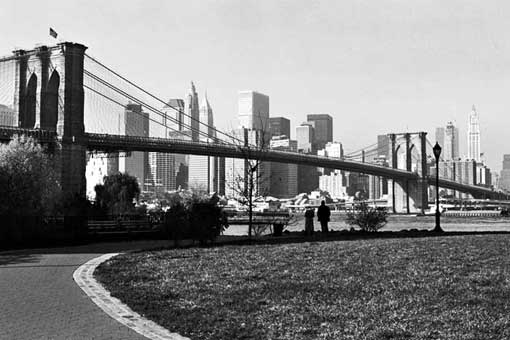
Every culture is composed of its own secret cluster of metaphors. America is no exception. If I mention the white whale most intelligent readers will know what I am talking about. If I mention the letter A most intelligent readers will know what I am getting at. If I mention the Brooklyn Bridge most intelligent readers will know where I am going. If I mention the eyes of T.J. Eckleburg most intelligent readers will guess what this is about. And, there are many more metaphors I could add to the mix. How about Faulkner’s bear? How about Stephen Crane’s red badge? How about Mark Twain’s raft and Hemingway’s wounds? The point simply is a culture is made up of a cluster of psychic metaphors from the very best of its literature. Without metaphors that carry weight, authority. and mystery, it is useless to read a culture because there is no culture.
When I speak of metaphor what I am really referring to is a culture’s central core of meanings where all ideas, all books, all stories, all dreams, all art, all literature converges, comes together and forms something at times that may even be greater than the culture itself. This kind of metaphor gathers all of a culture’s dreams and histories together into one tangled skein of reference and desire. For example, think of Homer and Greece, Shakespeare and England, Tolstoy and Russia. Here you don’t just have writers. You have whole galaxies of meaning. You have the central dream cores of entire civilizations. Great novels and great poems don’t just inform a culture, don’t just lay the groundwork for the future of that culture, they become the essence of that culture. Is this a Jungian idea? Very likely, but my emphasis here is on separate cultural identities and not mankind as a whole. Though, all of mankind ultimately becomes part of this process.
Which leads me to this question. Where are the major metaphors from the last thirty years for america? Think about it for a moment. Is there a metaphor from a long poem written by an american in the last thirty years that can withstand comparison to say Hart Crane’s bridge, Eliot’s waste land, Faulkner’s bear, Fitzgerald’s complex and elusive Gatsby, or Melville’s white whale?
I can think of just three at the moment. Tom McGrath’s LETTER TO AN AMERICAN FRIEND, Ed Dorn’s GUNSLINGER, and of course DILLINGER. As for major metaphors, LETTER introduces The exile or the internal emigré, GUNSLINGER is all about the Western Hero as trickster-clown, and DILLINGER is a forest of metaphors but the one that keeps coming to mind is the outlaw and his machine gun. Dillinger is definitely marginalized and an outlaw, just as the exile and the trickster clown, but he is different in one major respect. He knows that the only way to fight a culture which has marginalized him is to do it with force and what better force to use than the very technology which makes any modern culture powerful? You do it with automatic weapons. McGrath’s exile may know this but doesn’t resort to it. The exile’s revolt is the picket sign, the fist in the air, the protest. Dorn’s Gunslinger may also know this, but prefers to turn the culture inside out with a cosmic laugh. In fact, Dorn is the exact opposite of Ginsberg in this respect. Ginsberg howls his rage and contempt at the darkness. Dorn simply laughs his rage into the void.

But Dillinger refuses to be beaten down. Instead, he wages war against the people who put him in prison for nine years. And, to do this effectively, he uses a Thompson submachine gun. This is probably one of the most romanticized weapons since the introduction of the Model 1873 Colt Single Action revolver, the gun that won the west. The Thompson entered the movies with Scarface, late twenties early thirties. And it has stayed in the movies ever since. The Thompson has been in more movies than I could ever list here. One memorable scene comes to mind in MILLER’S CROSSING where Albert Finney goes up against some assassins who have come to kill him and he takes them out one at a time, mowing them down like a real pro. It’s a beautifully choreographed shootout and after awhile you realize that the Thompson itself is really the star in the gunfire.
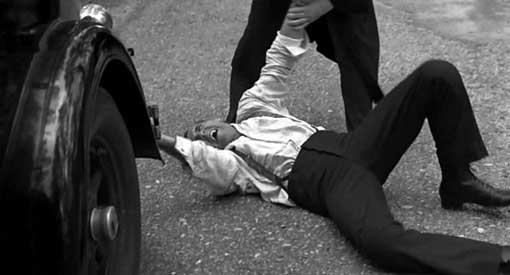
Movies like THE WILD BUNCH, BRING ME THE HEAD OF ALFREDO GARCIA, THE GODFATHER, DILLINGER, BONNIE AND CLYDE, LAST MAN STANDING (and I know there are many others) have somehow elevated the Thompson into some kind of mythic status. There is no sound like a Thompson going off and there is no look like a Thompson when you are holding it. The smaller contemporary automatic weapons like the Tech Nine really don’t compare. The Thompson submachine gun has acquired an authority and an authenticity that are essentially unequalled when it comes, not just to using lethal weapons, but to be seen posing with them as well. In some ways, the Thompson submachine gun becomes an outlaw anti culture all by itself in america.
Writing about the metaphor brings me to the two major mysteries in contemporary american literature because the metaphor is inextricably linked to them. First, there is the enigma of Judge Holden in BLOOD MERIDIAN. He is both a monstrosity and a figure of jagged and eloquent grace. To date, no one has adequately reached the heart of what Judge Holden is all about because he is so dark and because very few people can think on the plane that he does. And, this is mainly because Cormac McCarthy gives him no inner life. He talks talks talks talks the way Hamlet talks talks talks but we never get inside him. We never enter his intimate and obscene darkness.
Maybe this is why our most eminent critic Harold Bloom doesn’t understand the Judge’s primal power or his brilliant murderous self. Whatever you may have come to think of heroes in the novel the Judge is the true hero of BLOOD MERIDIAN. And, like the white whale, the Judge will forever remain an enigma notwithstanding the peculiar figure at the end of the novel. If there is to be a showdown between this figure and the Judge, it will be eons from now when it won’t matter much to Harold Bloom or anyone else. What we are talking about is a post apocalyptic shootout. Something that only god or the gods will find amusing.
The second major mystery is Dillinger. For a moment lets forget about the historical Dillinger just as Cormac McCarthy pretty much forgot about the historical Judge Holden. My only concern in the poem has been the Dillinger that I have been dreaming of. No other Dillinger counts. Dillinger is an archetype the way Holden is also an archetype. Dillinger is a myth the way Judge Holden is also a myth. Dillinger is a legend the way Judge Holden is also a legend. Dillinger is also flesh and blood and Judge Holden may or may not be flesh and blood or may or may not be godlike. Dillinger is a bankrobber and is also very capable of extreme acts of violence including murder. Judge Holden is a scalphunter which means he is also capable of extreme acts of violence including murder. In fact, BLOOD MERIDIAN concludes with his murder of the kid, who is actually a grown man, in an outhouse. And, Dillinger actually did kill a man with a Thompson and Holden especially loves to rape and kill children. While Dillinger doesn’t rape or kill children his movie star fame is enormously subversive to an entire society. In other words, both Holden and Dillinger transcend the rules that most men live by. If not gods, they live like gods.
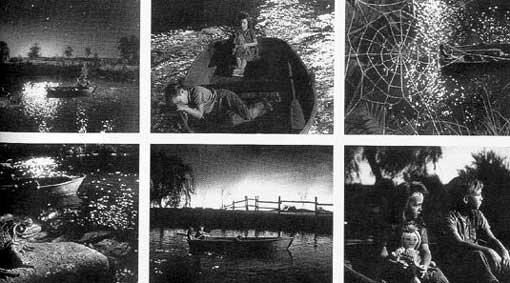
What is fascinating is that the more we think we know about Dillinger, the less we actually know about him. We think we know him because his dream life is so accessible. And, the less we know about Judge Holden, the more we try to know about him. Both characters are essentially unknowable and this makes them deep avatars of the american unconscious. I have no idea how McCarthy may finally discovered Holden. Did the Judge come as a nightmare? Was he based on someone McCarthy may have met in real life? Was he another aspect of Charles Olson who was as huge as the Judge and also as intelligent? Did he originate in Flannery O’Connor’s A Good Man Is Hard To Find? Is he somehow related to the lethal preacher of Davis Grubb’s THE NIGHT OF THE HUNTER? Where did the Judge originate? Who was he before he was the Judge? And, what is he now that he is the Judge? It is my theory that no character in a novel or a poem ever stays the same. That character may remain the same on the page but once someone reads the book, the character changes in the reader’s head and also in his life. And, this is why a character like the Judge or like Dillinger will always have a profound impact on the culture in which he originated. All cultures are impacted and ultimately changed by the great characters created inside those territories. Think of Achilles and Odysseus and Greece. Think of Hamlet and England. Think of Faust and Germany. Think of Baudelaire who was both character and writer and France. A great character brings great changes to his culture. Changes that are profound beyond belief.
As for Dillinger, he came from any number of places. Bits and pieces of him have been floating in and out of my life ever since I was a kid. Unlike the Judge, Dillinger does die at the end of the poem and in real life. But, like the Judge, Dillinger has a way of coming back, reconstituting himself, resurrecting himself in my thoughts and dreams. Dillinger is just as furiously alive as the Judge and Dillinger also seems to have the ability to be both dead and alive even as I write. Call it a conundrum, call it a paradox. Dillinger is like the white whale. He somehow takes all of the harpoons, yet survives. And, even when I someday finish the poem finally and completely, he will survive because he has eaten the wafer of death just as the wafer of death has also eaten him. I think it is because Dillinger has somehow become part of me. After all, he is the ultimate outlaw. Don’t we all secretly and longingly want that? If you are an american maybe you want that most of all.
I have called both Judge Holden and Dillinger complex metaphors appearing in even more complex epics. But, that’s almost an oversimplification. Judge Holden is a scalphunter. Therefore, maybe Judge Holden’s key metaphor is the scalp itself. Scalps were taken to do away with the opposition, namely, the Native American. And, scalps also became legal tender. They could be cashed in. They could be traded for goods or services or money. And, without money, you also do not have a culture.
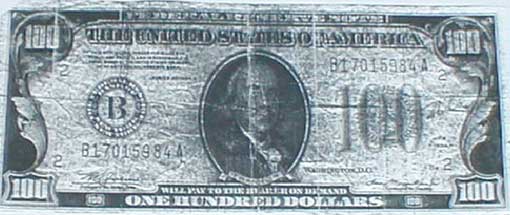
One Hundred Dollar Bill, 1934 series, given to William Hovious by John Dillinger.
Dillinger robs banks. He takes money that a few generations before was used to pay for scalps. It might even be said that, by doing this, Dillinger is attempting to destroy culture. And, even if he doesn’t succeed, he does oppose the Judge. And, while the Judge appears to be ageless and relies on the brute force of his own body, Dillinger is the representative outlaw of his time, agelessly handsome, a kind of Bogartian Don Juan. He prefers the Thompson. He loves that firepower because it is so lethal and so sexual and is undeniably attractive. It is all about being an american and living in america. It is all about defining the dark side of everything american.
Neither character is very much like the other except in the way that they are both charismatic and that they bring a whole cluster of metaphors to the works they appear in. The Judge with his scalps and Dillinger with his Thompson bring an essential darkness to the american epic. The metaphors may never fully explain america. Nothing can ever fully explain america. But, they are important keys to its ongoing visions and nightmares.
Todd Moore books are available via the Metropolis Shop Page here…