I’ve never really been absolutely sure how a poem starts with me. Sometimes it begins with a line, sometimes an image, something that takes me so far out of myself I can’t help but write the poem down. The true beginning of DILLINGER started out with a name and then a name under the sound of that name, and maybe a name even deeper down than that. Call it an under name. And, the name became a dare to see where it all would go from there. That subterranean talking. That talking going on just underneath the regular talking. An outlaw conversation, a demon dialogue, a place to dredge up all the dark dreams and the nightmare murders in the soul.
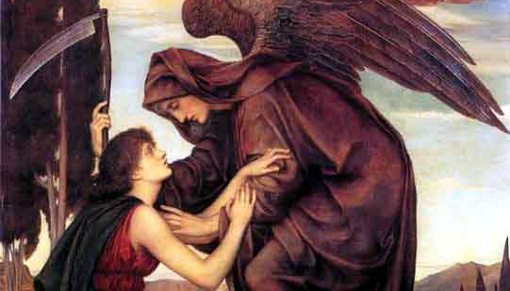
When I was a kid I remember watching an old alkie dancing with himself and humming strangely out by the fire barrel behind the Clifton Hotel. It was like he was saying words but I couldn’t make them out. It was like he was using dark words overlaid with more dark words. I’d only been watching him for just a few minutes when he stopped, staggered a few steps toward me and said, What’re you staring at. He looked as though he had just returned from a dying. When I didn’t reply, he pulled a bottle of Jim Beam out of his back pocket and took a swallow. I don’t like people watching while I do my little dance with the angel of death. I don’t see any angel of death, I said. He smiled and it almost looked like a dark moth flew out of his mouth. He said, You never see the angel of death, but it sees you. It sees you all over in the night of your being. Three days later my old man found the alkie dead in his room. His mouth was wide open as though surprised by some kind of phantom talking..
All great poems contain talking that goes on just underneath the talking. Whenever I start to read the best of Bukowski, lets say it’s BURNING IN WATER, DROWNING IN FLAME, I can hear the hum of his voice going. It isn’t even necessary to have heard the sound of Bukowski’s voice, but if you read this man with the intensity that builds up way down inside your own blood, you will begin to hear a kind of low hum that insists on coming out, breaking out, knocking itself free. It exists somewhere between a laugh and a growl. That hum, that gravel on gravel sound is always there, even though the poet may be dead, may have been dead for many years. But that hum is the soul of all of his talking in search of a language burnt up in the wind.

I’ve heard Whitman talking just under the skin of SONG OF MYSELF. But you have to listen for it. Except that it isn’t any kind of talking that you can understand. It’s almost as though Whitman is talking to himself about the poem and then the poem interrupts and he writes some lines down. Then the ghost talking starts in again and then there are places where it almost seems as though Whitman is talking, it’s like he’s talking directly to the poem, then he is saying the lines to himself so that he can get the direction of the way the poem is headed, then the poem is telling him intimate things about itself, things Whitman didn’t realize like the way the poem wanted to sound in certain places and Whitman fights it doesn’t want it to go like that then decides to let the poem have its way, then the under voice is talking only sometimes it almost feels as though the poem is singing in competition with the undertalking and Whitman is barely able to catch patches of that talking, then quick patches of other talking comes in from Shakespeare and the Bible quick nonsense patches that even Whtiman doesn’t understand but he loves the night chatter music of that kind of talking and he stops to listen and is enraptured with all that dark talking and then it all gets mixed together and together and together until the music is hypnotic. I sometimes wonder if Whitman had been able to get all of that down, especially the night whispers the midnight elegies of SONG OF MYSELF.
I have heard the nervous talk talk talking of Allen Ginsberg going on inside HOWL only it isn’t the studied OM that he is known for. It is something much earlier in him, something earthy and primal, something that exists along a line extending from early fear to early rage in him. I can hear the arc of the poem build up in his sound, the nuances of his nervousness, the words all wet with the way that he talks. The big city schizoid underground talking of his sound. I can hear the rush of the poem going on just under the floorboards of the poem. I can hear the frenzy of the poem talking to him as though it is a street preacher leaning in close and telling him about an apocalypse just beyond the apocalypse and I can hear the way that Ginsberg listens, the unbelievable focus of his listening. The way that Ginsberg hears contains the sound of his blood, the way it slams its frenzy through him. And, HOWL is the sound of the american night in his blood. HOWL is the soot of his nightmares.
I don’t know the sound of Shakespeare’s voice. No one does, no one can. But, for me, especially with HAMLET I think I know the way that his language boiled up inside him. I can hear the force of his resonance just under the words, the force of the sonic way that he says the words, the silence and the velocity of the way his lines must have gone out of him. That great rush of language pouring out near the candle burning low on the table. Who wouldn’t give a king’s ransom for that candle even though it couldn’t speak? But that dumb attendance to the speaking must somehow be worth everything. And, I can hear the way that the angel of death must have answered him, line for line, word for word. Not so much in the way that the angel of death must have talked to him, but the way that angel of death must have scorched the air with all of those mocking silences that it notched the air with. All of the undertalking is still there in HAMLET but the words have careened so hard against themselves down through the centuries that all I can hear is the mumble and the buzz of what used to sing there. The night chatter and the soaring mumbles of Elizabethan undertalking combined with Shakespeare’s heightened gibberish.
And, this is where Harold Bloom gets it all wrong. His theory of overhearing is one more fiction to deal with in what passes for literary criticism. What it really is, and HAMLET is the best example of all, is that the night chatter and mumbling and gibberish of Elizabethan English so mixed itself up in Shakespeare’s psyche that he created a character who doesn’t so much overhear himself speaking as he pays attention to all the undertalking that goes on inside. Shakespeare’s so called overhearing is nothing more than the natural result of all the undertalking that went on in his mind while he wrote the play and that undertalking became the central part of Hamlet’s character. You first listen to the night chatter in your mind, it’s all about night chatter and the rhetoric of mumbling. If anything, Hamlet listens intently to all of Shakespeare’s undertalking. Or, maybe once Hamlet fully became Hamlet he also became the name for Shakespeare’s undertalking. Or, if you prefer to believe that Hamlet and Shakespeare waged a kind of psychic civil war, then that war was waged for the control of all of that undertalking.
Undertalking is what all poets rely on and have relied on from the beginning of the poem onward. Oedipus is the name for Sophocles’ major undertalking, at least while he was writing the play. Satan is the name for all of Milton’s best undertalking, at least as long as he was writing PARADISE LOST. And, as far as Eliot was concerned, THE WASTE LAND is almost all undertalking. Pound instinctively knew this to be true before Eliot realized. There may be some truth to Bloom’s theory of overhearing, but I truly believe that it is the excitement of undertalking that gets a poet’s blood going.
All undertalking comes from death’s country, the republic of broken sticks and shattered bones. All conjuring, all poetries, all of our dream geographies emanate from there. And, nothing deletes death in the writing of poetry. Nothing deletes the damaged voice of death going on just under that thin membrane of poem. More than anything else Roberto Bolano knew this while writing his last novel 2666. He could hear everything going on in that novel as though it were an impossible poem, as though it were a huge riot of a poem. He could hear all of his characters’ voices. He could hear all of their ongoing nightmares. But, most of all he could hear all of that gorgeously grotesque undertalking, all of death’s anti songs competing for control of the narrative. Because death competes with the poet for control of all narratives from all time. Death has to compete because he knows that all primal language is blood. This might be the real reason for Hamlet’s death at the end of the play. Hamlet knew he could compete and maybe even win against Shakespeare for the control of the undertalking, but he couldn’t win against death.
Nothing deletes death in the writing of poetry because death is the muscle and the gristle wrapped intimately around the poet’s blood and bones of the poem. And, if you don’t believe me read Ted Hughes’ CROW to get the full of effect of what death or the metaphor for death can do in a poem. And, if you don’t believe me read Sylvia Plath’s ARIEL for one of the most powerful collection of death songs ever written. If for only a short period of time, both Hughes and Plath had entered into an archetypal menage a trois of undertalking with death itself. An undertalking that in reality is a witching out of the poem, a conjuring beyond all conjuring. And, all poems are negotiated, bargained for, and fought for in the country of witches.
I lost count of all the failed attempts I made to locate Dillinger or the essence of Dillinger in the early seventies. He stayed dark for me for a long time until I became dark for him. And, then it just seemed as though he walked into the room and sat down. Though, I’m not as sure it was a casual as that. When Dillinger finally appeared, he came with all of his rage and violence and murder intact. And, yes, he was a bankrobber but he knew all about the metaphysics of murder. And when he finally appeared was just suddenly there, full blown, with a separate consciousness all of its own.
The Name Is Dillinger is a shout into the void and an echo of all dark armerican undertalking. If Song Of Myself is the call and response of Whitman’s talking and undertalking, then The Name Is Dillinger is the call and response of the dark american dream talking and its murderous undertalking. Dillinger is the archetypal american outlaw because he embodies Samuel Mason licking blood off a scalping knife on the Natchez Trace, Ahab kissing the harpoon he plans to kill the White Whale with, Billy the Kid licking the barrel of the ten gauge shotgun he is getting all set to kill Bob Ollinger with. Dillinger is familiar with the visceral feel of weapons, he knows the intimate details of robbery and murder. He knows them the way he knows the nightmares living in his blood.
Even before I finished writing The Name Is Dillinger I somehow realized that I was writing the counterpart to Song Of Myself. I was involved in creating its murderous twin. Because I somehow knew I was going to be working out of america’s dark side. This was 1976 and no one had ever tried writing out of america’s dark side this way. Not with THE CANTOS, not with PATERSON, not with THE MAXIMUS POEMS. No poet working the long poem in the tradition of Pound, Williams, or Olson had ever made a central character an outlaw. Not like Dillinger. Which means that DILLINGER changes that tradition, forever.
As much as Hamlet wanted to die at the end of that play, Dillinger never wanted to die, ever, at all. For years I knew that somehow Dillinger had to die at the Biograph Theater and yet he would somehow conjure himself before me, make a good case against it and I was back to where I started again. The theory that it wasn’t Dillinger who was shot down that July night not far from that theater marquee was almost too appealing but something that churned out of all of the rubbish of my undertalking insisted that he had to die and Dillinger was right there again arguing just as strongly against it. Not just arguing. Some nights I know that we had knockdown dragout fistfights in my dreams over the ending of the poem.
Then one night while I was getting into bed, the first line came to me. The corpse is dreaming at the Biograph Theater. I wasn’t thinking about anything or maybe I was really thinking about everything and the line slipped out. Or, escaped. But I felt it almost literally twist out of my thinking, the words became palpable, I could touch them and they were asking almost demanding to be expanded on, to be made into a poem and I didn’t have a real choice. Or, if I had a choice, it didn’t really matter.
I let the line float around in my head for a couple of days. They say when you shoot a man in the head with a twenty two caliber pistol, the slug does not exit. Instead, it ricochets around and fucks up everything. I wanted that line to ricochet all over the place. I wanted it to fuck up everything inside my thinking. I wanted it to trigger just about everything it could with regard to what I thought about dying. I wanted it to make me think of everything related to death and then I wanted it to make all of my thinking which was also Dillinger’s thinking start to disappear, start to go away. And, I wanted that kind of thinking, lets call it death wish thinking, to be so appealing to Dillinger that he would would be drawn into it, sucked into it, the way some people are sucked in an undertow in the ocean. Somehow, what I wanted to do more than anything else was to find a way to show how all of Dillinger’s normal talking would converge with all of his undertalking. And, I know for a fact that Dillinger possesses a powerful river of undertalking. I wanted to find a way to make all of his talking and undertalking flow together and become simpler and simpler and simpler and tragically fragmented in his dying.
I think it might have been very powerful if Shakespeare had tried that with Hamlet. I get the rough hewn feel of that in Faulkner’s AS I LAY DYING. Joyce’s FINNEGAN’S WAKE is all rhetorical mumbling, gurgle, gibberish, and the night chant of living and dying. The thing that makes Dillinger still so much alive for me is that he finally relented and joined in that shattered conversation of all the dark talking with the angel of death. The most peculiar thing of all is that a character does and does not die in his dying. I’m sure that Shakespeare realized that Hamlet’s undertalking survived his death. I would be more than willing to bet that Shakespeare heard Hamlet talking to him in the middle of the night and that Hamlet’s voice brought him out of more than one seemingly sound sleep.
And, on any given day or night I can hear the way Dillinger’s undertalking flows in the deepest cisterns of my being and it never fails to sweep me away.

todd, i don’t want this to turn into a circle jerk, to be sure…but i hope you’re well aware of my long-time admiration for your poetry. i have also recently discovered you to be an essayest of rare and unusual power. this article is simply one of the best, most honest and interesting discussions of the creative process i’ve ever seen.
thank you.
john
todd, i was rereading dillinger the other day and i thought about you. we used to correspond about ten fifteen years ago. please write: jim.jimhayes@gmail.com